Oman’s announcement of an RO 11.1 billion investment programme for the water sector marks a decisive step towards strengthening national water security, environmental protection, and infrastructure resilience. Anchored in Oman Vision 2040, the plan reflects a clear shift away from short-term capacity expansion towards long-term sustainability, efficiency, and quality across the entire water and wastewater value chain.
While the scale and ambition of this investment are commendable, its ultimate success will depend not only on desalination capacity, transmission networks, and wastewater treatment plants, but also on addressing one of the sector’s most persistent and under-acknowledged challenges: sludge quality and management.
Infrastructure Growth Must Be Matched by Treatment Quality
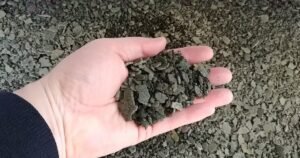
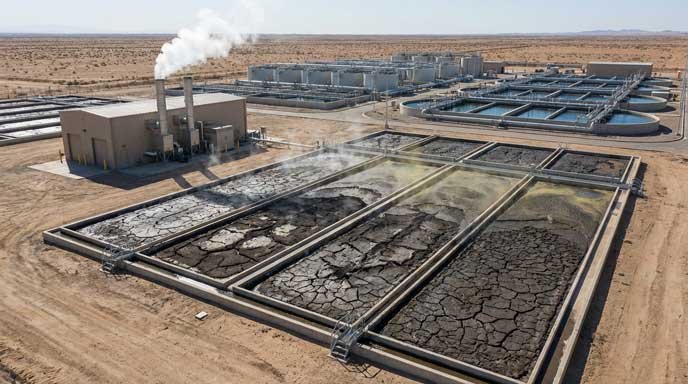
Over the past decade, Oman has made substantial progress in expanding wastewater treatment coverage and treated effluent reuse. However, experience across the region shows that sludge remains the weakest link in otherwise well-designed systems. Conventional approaches such as solar drying beds and thermal drying units often fall short due to inconsistent output quality, high energy consumption, weather dependency, odour issues, and limited compliance with evolving environmental standards.
As regulatory expectations tighten and reuse becomes central to national water strategies, poor sludge quality increasingly constrains the value that can be extracted from wastewater investments.
Sludge Quality Is Central to Circular Economy Goals
The RO 11.1 billion investment plan places strong emphasis on sustainability, reuse, and operational efficiency. These objectives align directly with circular economy principles, yet they cannot be fully realised without producing stable, sanitised, and environmentally compliant sludge.
High-quality sludge is essential for:
- Safe land application where permitted,
- Reduced reliance on landfilling,
- Minimised environmental and public health risks,
- Lower lifecycle costs for utilities.
Without addressing sludge treatment at the same strategic level as water production and wastewater treatment, utilities risk accumulating long-term liabilities rather than sustainable assets.
ELODE: Enabling the Next Phase of Water Sector Maturity
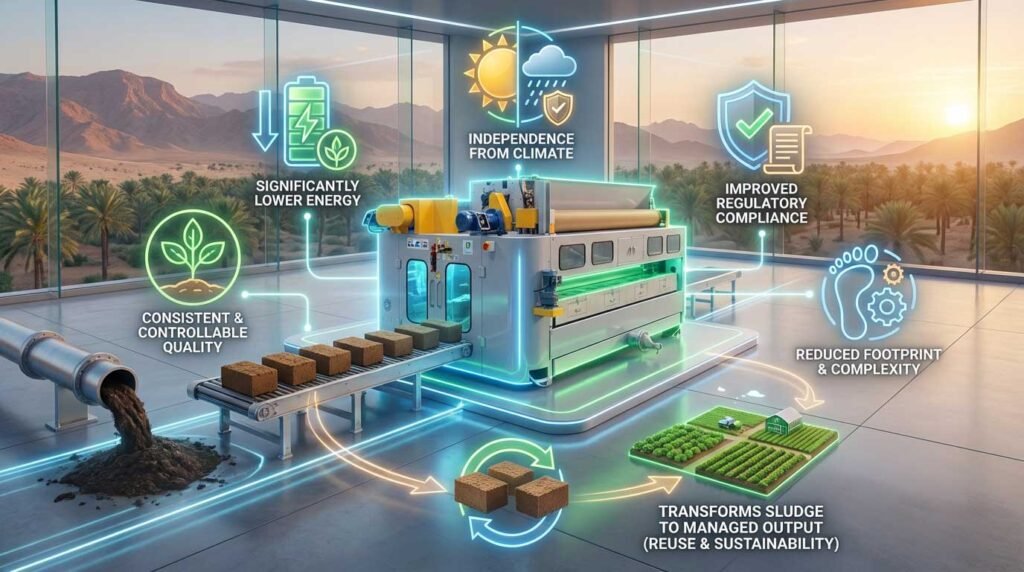
Advanced sludge treatment technologies such as ELODE offer a pathway to close this gap. Unlike conventional solar or thermal drying, ELODE provides:
- Consistent and controllable sludge quality,
- Significantly lower energy consumption compared to thermal systems,
- Independence from climatic conditions,
- Reduced footprint and operational complexity,
- Improved compliance with present and future regulatory standards.
- By improving sludge stability and hygiene at source, ELODE transforms sludge from a disposal problem into a managed output aligned with reuse and sustainability objectives.
- Supporting Regulatory Progress, Not Resisting It
One of the challenges regulators face is raising environmental and quality standards without placing unmanageable burdens on utilities. Technologies that enhance sludge quality enable regulators to strengthen standards with confidence, knowing that compliant, cost-effective solutions are available.
In this context, ELODE should be viewed not as an alternative to Oman’s water investments, but as a complementary enabler—allowing existing and future wastewater assets to perform at their full potential.
Aligning Investment with Outcomes
Oman’s RO 11.1 billion commitment signals leadership and foresight. To maximise returns on this investment, equal attention must be given to output quality, not only system capacity. Sludge treatment may represent a smaller proportion of capital expenditure, but it has an outsized impact on environmental performance, public acceptance, and long-term sustainability.
Integrating advanced sludge quality solutions into national planning, pilot programmes, and future upgrades would ensure that Oman’s water sector investments deliver measurable, durable outcomes aligned with Vision 2040.
Conclusion
Oman’s water investment strategy is bold and necessary. The next step is to ensure that it is complete. Addressing sludge quality through advanced, energy-efficient technologies such as ELODE will allow the Sultanate to fully realise the environmental, economic, and social benefits of its RO 11.1 billion commitment—turning wastewater infrastructure into a truly sustainable national asset.